









Security and preparedness are an essential a part of any exercise — and notably when water is concerned. For teenagers, studying easy methods to keep protected in and round water is essential. Earlier than you and your loved ones are able to splash, there are just a few steps to verify off first.
Defend your youngsters and assist them turn into extra comfy within the pool with this useful record of drugs from Jen Rezac, director of children and aquatics schooling for Life Time.
1. Correctly becoming, bright-colored swimsuit
Swimsuits simply stretch out over time — even simply over the course of the summer time. And since youngsters are likely to develop like weeds, attempting to suit them into hand-me-downs will be tempting. Make certain your youngster’s swimsuit isn’t saggy anyplace on their physique. You need it to be tight sufficient to not wrinkle, however not so tight that it restricts their vary of movement or causes discomfort.
“The proper swimsuit makes all of the distinction for teenagers within the water,” says Rezac. “It should really feel like a layer of pores and skin — you barely discover it’s there. If it’s a battle to place it on when it’s dry, it’s not meant to be.”
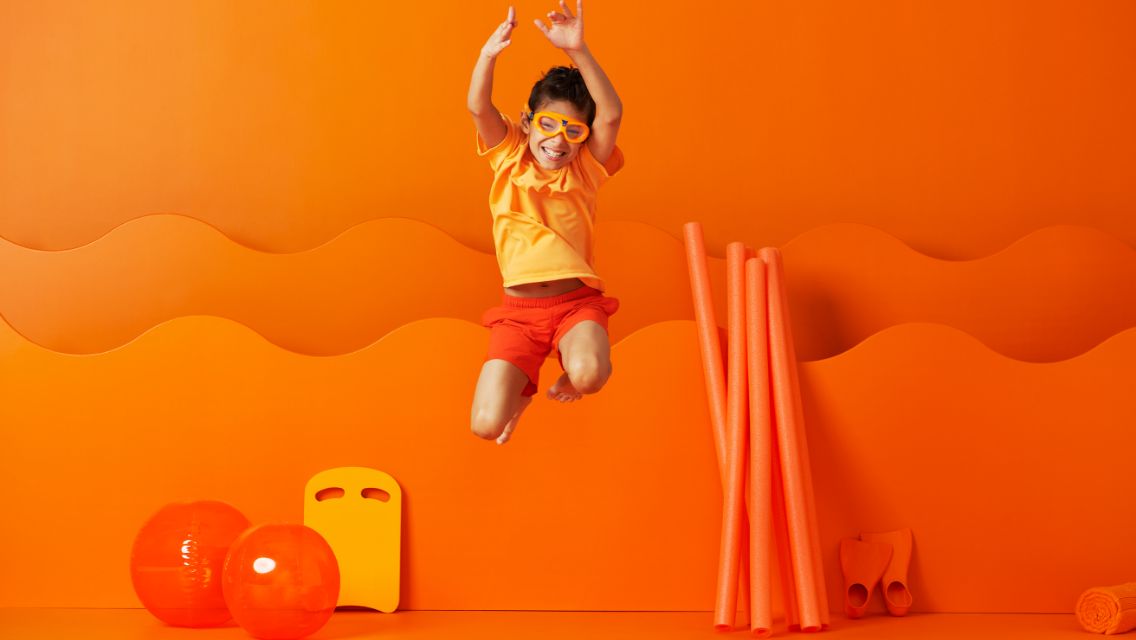
And in terms of swimsuit shade, the brighter the higher. Neon colours are nice for figuring out your youngster simply, particularly if there are lots of people within the pool. Attempt to keep away from white, mild blue, or darkish colours like navy or black that aren’t as simple to identify.
“I personally at all times put my youngster in a shiny orange swimsuit once we go swimming so I can simply determine him even throughout swim classes,” Rezac provides.
2. Coast-Guard-approved life jacket
There are lots of choices out there for all times jackets, however Rezac urges you to decide on one that’s Coast-Guard-approved and suits the burden restrict on your youngster. Verify the tag to seek out this data. When placing it on, you should definitely buckle all of the straps and pull up on the shoulders. Properly-fitted jackets received’t journey greater than your youngster’s ears.
3. Coast-Guard-approved floating units
“In case your youngster makes use of floating units, in addition they should be Coast-Guard-approved,” says Rezac. “If it’s important to fill it with air, there’s a better probability for hazard as deflating is feasible.”
She provides, “Keep away from any swimsuits which have ‘inbuilt flotation’ — even when it’s sewn in. These don’t assist youngsters study to swim and they don’t seem to be life jackets.”
4. Swim goggles
“The particular goggles you select make a world of distinction. Keep away from goggles that cowl the nostril (like a snorkel) or ones which have only one skinny strap within the again,” Rezac advises. “At all times ensure they’ve a thick liner of silicone to cushion the pores and skin across the eyes and create a water-proof seal.”
Rezac provides just a few tricks to verify in case your youngster has placed on their goggles accurately:
- Take a look at the brand to make sure it’s not upside-down.
- To search out the proper tightness, have your youngster maintain the goggles towards their eyes, then modify the strap. In case your youngster takes the goggles off and has a hoop across the pores and skin of their eyes, it’s an indication they’re too tight.
5. Hair tie or swim cap
“In case your youngster has lengthy hair that may get of their face whereas swimming, tie it again right into a ponytail or bun. It’s also possible to have them put on a swim cap, however this could be a little bit of a battle with youthful swimmers,” says Rezac.